
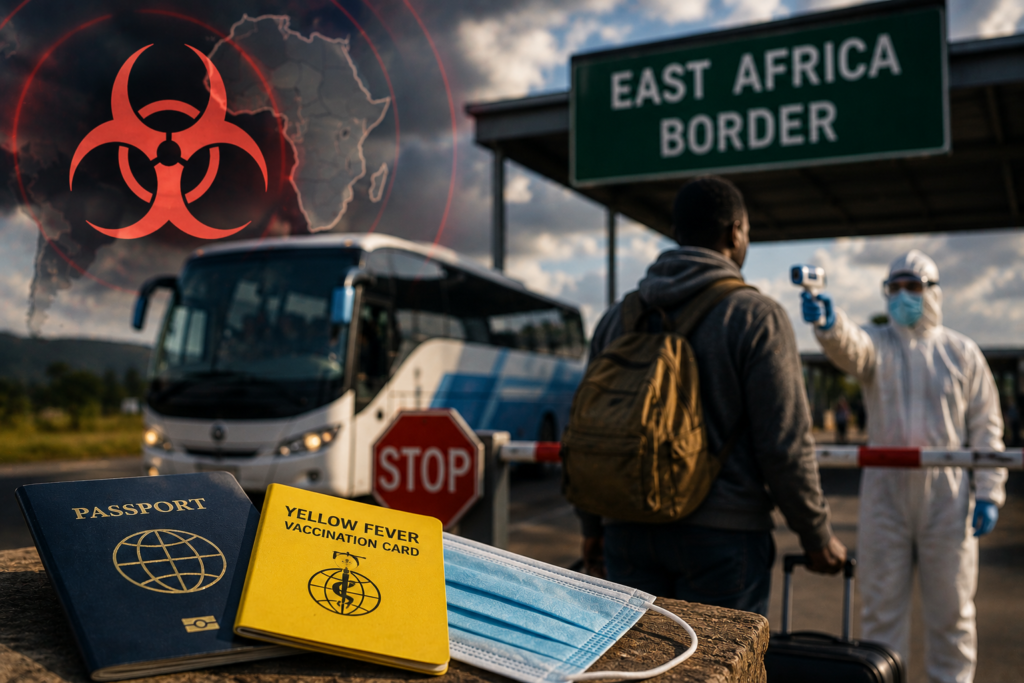
The first item on this list is so important that it deserves special attention.
If you have recently been in the Democratic Republic of Congo (DRC), or if you are a Congolese citizen planning to travel to another East African country, you should not assume that the normal travel process will apply to you.
Because of the ongoing Ebola outbreak, some countries have increased health screening and monitoring at border crossings. Requirements and procedures can change quickly, and relying on outdated or unofficial information can be costly.
Before booking a ticket, paying for transport, or making any travel preparations, take time to verify the latest requirements through trusted sources. A small mistake could result in being delayed, denied entry, or even sent back after spending money on transport and other travel expenses.
Now here is a simple checklist of things to never ignore while travelling across borders:
1. Passport or Laissez-Passer
Ensure your travel document is valid and accepted for your intended destination. Check the expiry date and confirm that it meets the requirements of the countries you plan to visit.
2. Valid Visa
Do not assume you can obtain a visa upon arrival. Verify the latest visa requirements before traveling and make sure your visa remains valid for the entire duration of your journey.
3. Yellow Fever Vaccination Card
Many East African countries require proof of Yellow Fever vaccination. Keep your card safe and easily accessible, as immigration or health officials may ask to see it.
4. Emergency Cash
Always carry extra cash that is reserved for emergencies only.
As a minimum, consider carrying an additional $30 that you do not plan to spend. If your journey involves crossing multiple borders, carrying at least $100 in emergency funds is even better.
Unexpected situations can arise during travel, including transport delays, additional accommodation costs, route changes, or emergency purchases. Having emergency funds available can save you significant stress and inconvenience.
Final Advice
Traveling during a public health outbreak requires more preparation than usual. Do not rely on assumptions, rumors, or information from unverified sources.
Verify requirements before you travel, prepare thoroughly, and make sure you understand the latest situation on your route.
A few minutes of preparation today can save you money, time, and unnecessary frustration tomorrow.