
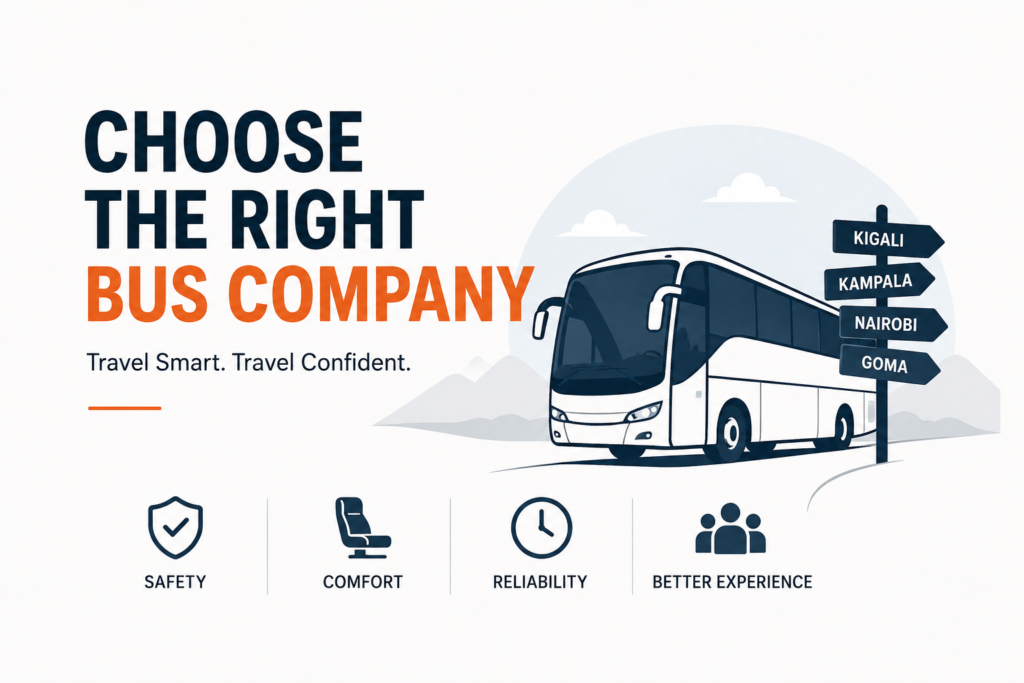
Part 1: The Decision That Can Make or Break Your Entire Journey
You Think You’re Buying a Bus Ticket…
But What You’re Really Buying Is an Entire Travel Experience.
Imagine this.
You’ve been planning your trip for weeks.
Your passport is ready.
Your visa has been approved.
You exchanged your money.
You packed your bags.
You even said goodbye to your family and friends.
Finally, you arrive at the bus station, excited about your journey across East Africa.
You board the bus, find your seat, and tell yourself,
“The hard part is over.”
But then…
The bus leaves three hours late.
The air conditioning doesn’t work.
The seat you paid for has been given to someone else.
At the border, confusion begins because nobody explains the immigration process.
Your luggage disappears for nearly an hour after crossing.
The driver changes buses halfway through the journey without warning.
Suddenly, what looked like a cheap ticket has become one of the most stressful travel experiences you’ve ever had.
Now ask yourself:
Was the ticket really cheap?
Or did it become the most expensive decision of your trip?
The Mistake Most Travelers Make
When people choose a bus company, they usually compare only one thing:
The ticket price.
That sounds reasonable.
After all, why pay more if another company offers the same route for less?
Unfortunately, that single question often causes travelers to overlook the factors that actually determine whether their journey will be smooth or stressful.
The reality is this:
A bus ticket is one of the smallest costs of your journey.
The real costs appear later.
You can lose:
- Time
- Comfort
- Peace of mind
- Important appointments
- Hotel reservations
- Connecting transport
- Business opportunities
Sometimes, one poor transport decision affects everything that follows.
Why This Guide Matters More Than Ever
Cross-border bus travel in East Africa has grown significantly over the past decade.
Every day, thousands of people travel between:
- Rwanda
- Uganda
- Kenya
- Burundi
- Democratic Republic of Congo
- South Sudan
Some travel for work.
Others travel for business, education, tourism, medical treatment, or family visits.
Despite this increase in travel, finding reliable information remains surprisingly difficult.
Most websites tell you:
- departure times
- ticket prices
- destinations
Very few explain what travelers actually want to know before booking:
- Which company is more reliable?
- Which buses are usually cleaner?
- Which companies communicate well during delays?
- Which operators handle luggage professionally?
- Which company is better for first-time international travelers?
- What should foreign visitors know before choosing?
These are the questions that matter.
And unfortunately…
They’re often answered only after people have already bought the wrong ticket.
The Internet Is Full of Information…
But Not Enough Guidance
Today, most travelers search online before making decisions.
They type questions like:
- “Best bus company from Kigali to Kampala”
- “Safest bus to Uganda”
- “Bus reviews East Africa”
- “How to book a bus ticket in Rwanda”
Within seconds, hundreds of websites appear.
But here’s the problem.
Most of them were written to attract clicks.
Not to help you make a better decision.
Some simply copy information from bus companies.
Others repeat outdated details that no longer reflect reality.
Very few explain the practical differences between operators or help travelers understand what they should actually be looking for.
That is exactly why TIC exists.
Not to sell tickets.
But to help travelers make informed decisions before they spend their money.
The Seven Mistakes That Cost Travelers the Most
After speaking with passengers at bus stations, listening to travelers’ experiences, and observing countless cross-border journeys, one thing becomes clear:
Most travel problems begin long before the bus leaves the station.
They begin with the booking decision.
Here are the first mistakes that cause the biggest problems.
Mistake #1: Choosing the Cheapest Ticket Without Looking Beyond the Price
Everyone likes saving money.
But experienced travelers know something beginners often don’t.
There is a difference between:
Cheap
and
Good value.
Sometimes paying just a little more gives you:
- Better customer service
- More comfortable seating
- Cleaner buses
- Better luggage handling
- More reliable departure times
A slightly more expensive ticket may actually save you hours of frustration later.
Mistake #2: Assuming All Bus Companies Offer the Same Experience
Two companies may travel the exact same route.
Yet the experience can be completely different.
One may communicate clearly with passengers.
The other may leave people confused during delays.
One may organize border procedures efficiently.
Another may leave passengers wondering where to go.
One may prioritize customer care.
Another may simply focus on getting from point A to point B.
The destination may be identical.
The journey rarely is.
Mistake #3: Ignoring Recent Traveler Experiences
Many people make decisions using information that is several years old.
But transportation changes quickly.
Management changes.
Routes change.
Customer service changes.
Even a company with an excellent reputation five years ago may be very different today.
That is why recent traveler experiences often provide valuable insights.
However, they should also be interpreted carefully.
One negative review does not necessarily represent the overall experience.
Likewise, one glowing review does not guarantee perfect service.
The goal is to identify consistent patterns.
Mistake #4: Booking Without Understanding the Journey
Some travelers only ask:
“How much is the ticket?”
Instead, they should also ask:
- How many border crossings are involved?
- How long does immigration usually take?
- How many scheduled stops are there?
- Are meals available?
- Is luggage included?
- What happens if the bus is delayed?
These questions help set realistic expectations before the journey begins.
The First Four Things You Should Evaluate Before Booking
If you only remember four things from this article, let them be these.
1. Reliability
Can the company be trusted to operate consistently?
Reliability isn’t about never having delays.
Unexpected events happen.
Reliable companies are those that communicate clearly and manage problems professionally.
2. Safety
Safety should never be negotiable.
While no transport system is completely risk-free, look for companies with a reputation for responsible operations, professional drivers, and well-maintained vehicles.
Choosing a company based solely on price while ignoring safety is a risk that is rarely worth taking.
3. Customer Communication
Imagine arriving at the station only to discover your departure has changed.
Would you rather learn about it from a helpful staff member…
Or from another confused passenger?
Good communication often makes the difference between a stressful day and a manageable inconvenience.
4. Border Experience
This is one of the most overlooked factors in East African bus travel.
Crossing an international border is not the same as traveling within one country.
Different bus operators prepare passengers differently.
Some explain procedures clearly.
Others assume everyone already knows what to do.
For first-time travelers, that difference can significantly influence the overall experience.
Coming Up in Part 2…
Now that we’ve covered the most common booking mistakes, the next section will answer questions that surprisingly few travelers ask—but should.
We’ll explore:
- How to identify a trustworthy bus company before you pay.
- The warning signs that should make you reconsider a booking.
- Whether you should buy directly from the bus company or use an agent.
- What foreign tourists should look for before choosing a bus.
- Why some companies appear cheaper but end up costing more.
Part 2: What Experienced Travelers Look for Before They Book
Here’s the Truth Most People Discover Too Late
Imagine two travelers leaving Kigali for Kampala on the same day.
They both paid almost the same ticket price.
They both departed from the same city.
They both crossed the same border.
Yet when they arrive in Kampala, one traveler says,
“That was one of the smoothest journeys I’ve ever had.”
The other says,
“Never again.”
How can two people traveling the same route have completely different experiences?
The answer often isn’t the road.
It isn’t the weather.
It isn’t even the border.
It starts with one decision made days earlier:
The bus company they chose.
Experienced travelers understand something that first-time travelers often don’t.
A bus company isn’t simply transportation.
It becomes part of your entire travel experience for the next 8, 10, or even 20 hours.
That’s a long time to spend regretting one decision.
The 6 Questions Every Smart Traveler Asks Before Paying
If there is one habit that separates experienced travelers from everyone else, it is this:
They ask questions before they pay.
Not afterward.
Here are six questions worth asking.
1. Does This Company Regularly Operate This Route?
Some companies specialize in certain corridors.
Others operate many routes but may have less experience on specific international journeys.
For example, a company that has years of experience operating between Kigali and Kampala may have a better understanding of:
- Border procedures
- Passenger flow
- Common delays
- Route-specific challenges
This experience often translates into a smoother journey.
2. How Does the Company Communicate With Passengers?
Transportation doesn’t always go exactly as planned.
Road conditions change.
Traffic builds up.
Borders become busy.
Mechanical problems occasionally happen.
The real difference is not whether delays occur.
The difference is how passengers are treated when they do.
Good operators communicate.
Poor operators leave passengers guessing.
As a traveler, ask yourself:
If something unexpected happens, will I know what’s going on?
3. Is It Easy to Reach the Company?
Imagine this situation.
You arrive at the station and cannot find your departure platform.
Or your travel plans suddenly change.
Can you contact the company?
Can someone answer your questions?
Reliable transport providers make it easy for passengers to reach them before, during, and after the journey.
A company that is difficult to contact before your trip is unlikely to become easier to reach once you’re already on the road.
4. What Is Their Reputation for Handling Luggage?
Many travelers focus entirely on the seat.
Experienced travelers also think about their belongings.
Consider what you’re carrying:
- Clothing
- Electronics
- Important documents
- Gifts
- Business materials
Ask yourself:
How are these items handled during loading, unloading, and border inspections?
A careful operator treats passengers and their luggage with equal importance.
5. Do They Make First-Time Travelers Feel Comfortable?
This question is especially important for:
- Tourists
- International students
- Business visitors
- Anyone crossing a particular border for the first time
Some companies naturally create an environment where passengers know what is happening.
Others assume everyone already understands the process.
For someone unfamiliar with East African border procedures, clear guidance can make a significant difference.
6. Does the Overall Experience Match Your Purpose?
Not every traveler has the same priorities.
Someone traveling for a holiday may value comfort.
A business traveler may prioritize punctuality.
A family traveling with children may appreciate helpful staff and organized boarding.
Students may focus more on affordability.
Before comparing bus companies, ask yourself an even more important question:
What matters most for this journey?
Once you know that answer, comparing operators becomes much easier.
Five Warning Signs You Should Never Ignore
Sometimes choosing the right bus company is less about finding the best one…
…and more about avoiding the wrong one.
Here are five warning signs that deserve your attention.
🚩 Warning Sign #1
Nobody Can Clearly Explain the Journey
If different staff members give different answers about:
- departure time
- arrival time
- luggage rules
- border procedures
that inconsistency should encourage you to ask more questions before booking.
🚩 Warning Sign #2
You’re Being Pressured to Pay Immediately
Good service gives travelers confidence.
Pressure often creates unnecessary urgency.
If someone insists that you must pay right now without allowing you time to understand the journey, take a moment to slow down and verify the information you’re receiving.
🚩 Warning Sign #3
Everything Sounds Too Good to Be True
Be cautious when promises seem unrealistic.
For example:
- “You’ll never stop at the border.”
- “You’ll arrive much faster than everyone else.”
- “No delays are ever possible.”
Cross-border travel involves many factors outside a bus company’s control.
Reliable operators usually provide realistic expectations instead of perfect guarantees.
🚩 Warning Sign #4
You Can’t Find Consistent Information
Look for consistency.
Does the company provide:
- clear contact information?
- recognizable branding?
- accurate departure details?
- recent customer experiences?
When reliable information is difficult to find, it’s wise to ask additional questions before committing.
🚩 Warning Sign #5
Nobody Is Willing to Answer Your Questions
This may seem small.
It isn’t.
How a company treats potential customers often reflects how it treats passengers after they’ve paid.
If your concerns are ignored before the journey begins, they are unlikely to receive more attention during the trip.
Should You Book Directly or Through an Agent?
This is one of the questions TIC receives most often.
The honest answer is:
It depends.
Both options can work well.
Booking directly with the bus company may offer:
- direct communication
- official schedules
- fewer misunderstandings
Using a reputable travel agent can also be helpful, especially if:
- you’re unfamiliar with local transport
- you’re planning several border crossings
- you need assistance comparing routes
- you want someone to explain the requirements before you travel
The important point is not whether you use an agent.
It’s whether you use a trusted one.
A Special Note for Foreign Visitors
If you’re visiting East Africa for the first time, your needs may differ from those of local travelers.
You may need additional guidance about:
- immigration procedures
- border expectations
- accepted travel documents
- luggage rules
- currency exchange
- local transport after arrival
Many visitors assume that buying the ticket is the difficult part.
Often, it’s everything that happens before and after boarding that determines whether the journey feels simple or stressful.
This is why preparation matters.
Coming Up in Part 3…
We’ve now looked at how experienced travelers evaluate bus companies before booking.
In the next section, we’ll go even deeper.
We’ll discuss:
- Why the cheapest ticket is not always the cheapest journey.
- How comfort, safety, and reliability affect long-distance travel.
- What happens during border crossings that many bus companies never explain.
- How to prepare your luggage and documents for a smoother experience.
- The hidden costs travelers rarely consider until it’s too late.
By the end of Part 3, you’ll have a practical framework for choosing the right bus company based on your own travel needs—not just the ticket price.
Part 3: The Hidden Costs of Choosing the Wrong Bus Company
A Cheap Ticket Can Become the Most Expensive Part of Your Journey
Imagine two travelers.
Let’s call them David and Sarah.
Both are traveling from Kigali to Kampala.
David spends a little extra time researching before buying his ticket.
Sarah simply buys the first ticket recommended to her because it’s slightly cheaper.
The difference?
Only 5,000 RWF.
At first, Sarah feels like she made the smarter decision.
But the next day…
Her bus leaves almost two hours late.
She misses the appointment she had scheduled in Kampala.
She pays for another taxi because she arrives after public transport has stopped operating.
Her hotel booking is affected because she arrives much later than expected.
The money she thought she saved disappears in a single day.
Meanwhile, David arrives on time, checks into his hotel as planned, and starts enjoying his trip.
Both travelers bought a bus ticket.
Only one bought peace of mind.
Price Is Visible.
Value Is Hidden.
This is one of the biggest mistakes travelers make.
When buying a ticket, the first thing everyone notices is the price.
But the things that actually determine whether a journey is enjoyable are often invisible until the trip begins.
For example:
- How organized is boarding?
- Are passengers kept informed?
- Does the company handle delays professionally?
- Is luggage managed carefully?
- Are first-time travelers guided through border procedures?
These things don’t appear on the ticket.
Yet they shape the entire experience.
Comfort Is More Important Than Most People Realize
Many cross-border journeys in East Africa last between 6 and 20 hours, depending on the route.
Now imagine spending that amount of time:
- in an uncomfortable seat
- with little legroom
- in poor ventilation
- unable to sleep
- without knowing when the next stop will be.
Comfort is not a luxury on long-distance travel.
It affects:
- your energy
- your health
- your mood
- your productivity after arrival.
If you’re traveling for an interview, business meeting, university registration, or family event, arriving exhausted can affect much more than the journey itself.
Border Crossings: Where Preparation Becomes Everything
Most first-time travelers imagine that the difficult part is buying the ticket.
In reality…
The border crossing often determines whether the journey feels smooth or stressful.
Every international route is different.
Some borders are usually processed quickly.
Others become busy during holidays or weekends.
Sometimes there are health screenings.
Sometimes immigration procedures change.
Sometimes travelers need additional verification.
A good bus company cannot control immigration decisions.
However, it can influence how prepared passengers feel before they reach the border.
Companies that communicate clearly help reduce confusion.
Companies that provide little information leave passengers trying to figure things out on their own.
The One Question Many Travelers Forget to Ask
Before buying your ticket, ask yourself:
“If something unexpected happens during this journey, who will help me?”
Think about it.
Travel is unpredictable.
Roadworks.
Heavy rain.
Mechanical problems.
Busy border crossings.
Traffic.
None of these necessarily indicate poor service.
What matters is how passengers are supported when unexpected situations arise.
That is one of the biggest differences between transport providers.
Luggage Is More Than Just a Bag
Many people focus on the bus.
Experienced travelers also think about what goes underneath it.
Your luggage may contain:
- clothes
- electronics
- work equipment
- important documents
- gifts
- medication.
Before booking, consider asking:
- Are luggage limits clearly explained?
- How is luggage identified?
- What happens during border inspections?
- What if additional luggage is carried?
Knowing these details before departure can help prevent unnecessary confusion later.
Day Travel or Night Travel?
This is another decision many travelers make without much thought.
Each option has advantages.
Day Travel
Many people prefer daytime travel because:
- visibility is better
- scenery is enjoyable
- communication at stops may feel easier
- first-time travelers often feel more comfortable.
Night Travel
Night buses can save accommodation costs and help maximize daytime hours at your destination.
However, they also require travelers to think carefully about:
- arrival time
- transport after arrival
- personal comfort
- rest before important appointments.
Neither option is automatically better.
The best choice depends on your journey and priorities.
Every Traveler Has Different Priorities
One mistake is assuming that the “best” bus company is the same for everyone.
Consider these examples.
Business Traveler
May prioritize:
- punctuality
- reliable schedules
- quiet environment.
Tourist
May value:
- comfort
- helpful staff
- luggage handling
- guidance during border crossings.
Student
May focus on:
- affordability
- flexible schedules.
Family
May appreciate:
- organized boarding
- helpful customer service
- predictable stops.
The right company often depends on who is traveling—not just where they are going.
Small Details That Experienced Travelers Notice
People who travel frequently often observe things that first-time passengers overlook.
For example:
- Is the boarding process organized?
- Are departure times explained clearly?
- Do staff communicate respectfully?
- Are passengers informed during delays?
- Are stops announced?
- Are instructions easy to understand?
None of these details may seem important individually.
Together, they shape the quality of the journey.
The Cost of Guessing
One of the biggest travel mistakes is assuming that all bus companies operate in exactly the same way.
They don’t.
Routes may be similar.
Destinations may be identical.
Ticket prices may even be close.
But the passenger experience can vary significantly.
Choosing without understanding those differences is often a gamble.
And most travelers only discover that after the bus has already left the station.
The Best Travelers Don’t Just Prepare Their Bags
They Prepare Their Journey.
Packing is important.
Buying a ticket is important.
But preparing your journey is equally important.
That means thinking about:
- the route
- the company
- the border
- your documents
- arrival plans
- possible delays.
Preparation rarely removes every challenge.
But it often prevents avoidable ones.
A Lesson I Have Learned
Over time, I have spoken with many travelers in bus stations across East Africa.
Interestingly, very few people complain that a journey was too well prepared.
What they often regret is something else.
“I wish someone had told me this before I booked.”
That sentence appears again and again.
And it is one of the reasons TIC was created.
Because the best travel advice is not the advice you receive after something goes wrong.
It is the advice that helps prevent the problem in the first place.
Coming Up in Part 4…
In the final section, we’ll bring everything together.
You’ll receive:
- A practical pre-booking checklist you can use before every journey.
- Frequently asked questions from travelers crossing East Africa by bus.
- A summary of the most important lessons from this guide.
- Guidance on when it makes sense to seek personalized travel advice.
- A strong conclusion that helps readers move from information to confident action.
Part 4: The Smart Traveler’s Checklist Before Booking Any Bus Ticket
Before You Pay for Your Ticket, Go Through This Checklist
The difference between a stressful journey and a smooth one often comes down to what happens before the ticket is purchased.
Use this checklist every time you plan to travel across East Africa.
✅ Confirm the Route
Make sure the bus actually travels the route you intend to take.
If your journey involves connecting buses or multiple border crossings, understand exactly where transfers happen and how much time they usually take.
✅ Verify Your Travel Documents
Never assume yesterday’s requirements are still the same today.
Check that you have the correct travel documents for every country you plan to enter.
Depending on your nationality and destination, this may include:
- Passport or Laissez-Passer
- Visa (if required)
- Yellow Fever vaccination certificate
- Additional health or immigration documents if applicable
Requirements can change, especially during public health situations or policy updates.
✅ Understand the Border Process
One of the biggest causes of travel stress is simply not knowing what to expect.
Ask yourself:
- How many borders will I cross?
- What happens when we arrive at immigration?
- Will I need to carry my luggage during inspections?
- How long does the process usually take?
The more you understand beforehand, the more confident you’ll feel during the journey.
✅ Know the Luggage Rules
Don’t wait until boarding to discover that your luggage exceeds the company’s limits.
Clarify:
- luggage allowance
- oversized items
- additional baggage fees
- fragile belongings
A few questions now can prevent unnecessary complications later.
✅ Plan Your Arrival
Many travelers focus only on departure.
Experienced travelers plan their arrival too.
Think about:
- What time will I arrive?
- Will public transport still be available?
- Do I need accommodation?
- Is someone meeting me?
A well-planned arrival often makes the entire journey feel much easier.
✅ Keep Emergency Funds
Even the best travel plans can change.
Unexpected situations may include:
- transport delays
- additional accommodation
- meals
- local transport
- document photocopies
- emergency communication
Having reserved emergency money can reduce stress considerably.
✅ Save Important Contact Numbers
Before leaving, keep contact details for:
- the bus company
- your accommodation
- family or friends
- emergency contacts
It is much easier to solve problems when important information is already available.
Frequently Asked Questions
These are some of the questions travelers ask most often before crossing borders by bus.
Is the Cheapest Bus Always the Best Choice?
Not necessarily.
A lower ticket price may be attractive, but it should be considered alongside reliability, comfort, customer service, safety, and the overall travel experience.
Sometimes paying slightly more provides significantly better value.
Should I Book Online or Buy My Ticket at the Station?
Both options can work.
However, whichever method you choose, make sure you are booking through an official or trusted source.
If you use an agent, verify that they are reputable and understand your travel requirements.
How Early Should I Arrive at the Bus Station?
For international journeys, arriving early gives you enough time to:
- locate the correct departure point
- confirm your booking
- organize your luggage
- receive any important travel instructions
Rushing increases the chances of making avoidable mistakes.
Can Border Procedures Change Without Notice?
Yes.
Border procedures may change due to:
- public health situations
- immigration policy updates
- security measures
- operational requirements
This is why relying on outdated information can create unnecessary problems.
Is It Safe to Rely Only on Information From Social Media?
Social media can be useful for hearing about other travelers’ experiences.
However, it should not be your only source of information.
Experiences vary, and posts may be outdated, incomplete, or incorrect.
Whenever possible, verify important travel information through official authorities or trusted travel advisors.
What If I’m Traveling for the First Time?
First-time travelers often have more questions than experienced passengers.
That is completely normal.
Taking time to understand the route, border procedures, and transport options before traveling usually leads to a much more comfortable experience.
One Final Thought
There is something I have noticed after speaking with many travelers over the years.
Very few people regret spending an extra hour preparing for a journey.
Many regret spending weeks dealing with problems they could have prevented.
Travel is exciting.
It opens opportunities.
It connects families.
It creates memories.
But successful travel rarely happens by chance.
It happens because someone took the time to prepare.
Why TIC Exists
At TIC, we believe that good travel begins long before you board the bus.
It begins with understanding your journey.
Every traveler is different.
Your nationality.
Your destination.
Your travel purpose.
The countries you plan to cross.
The documents you carry.
Even the season you travel can influence your experience.
That is why there is no single checklist that works perfectly for everyone.
The more unique your journey becomes, the more valuable personalized guidance becomes.
Before You Book Your Next Ticket…
Ask yourself one question.
Am I making this decision based on complete information… or am I making assumptions?
Sometimes the difference between a successful journey and an expensive mistake isn’t the bus you board.
It’s the information you had before boarding it.
Choose carefully.
Prepare thoroughly.
Travel confidently.
Continue Planning Your Journey
If you found this guide helpful, you may also enjoy these TIC resources:
- Kigali to Kampala by Bus: Complete Travel Guide
- How to Cross the Rwanda–Uganda Border Without Problems
- 10 Mistakes Travelers Make When Booking Cross-Border Bus Tickets
- How to Avoid Fake Bus Ticket Agents in East Africa
- Complete Cross-Border Travel Checklist for East Africa
- Why Some Travelers Are Stopped at East African Borders Even With Valid Documents
Together, these guides will help you prepare for your journey with greater confidence